Critical Communication Readiness Self-Assessment
Most organizations have never tested whether they can reach everyone
A site closes at 5 a.m. because of severe weather. A safety instruction changes halfway through a shift. The message goes out, and then the questions start. Did it reach the people it needed to reach? Did it reach them in a language they understand? And can you show, afterward, who confirmed it and who never saw it?
In many distributed organizations urgent communication still depends on manager cascades, bulletin boards, manually maintained contact lists and channels that do not talk to each other. That setup looks like it works, right up until speed, accuracy and proof all matter at once.
This worksheet helps you find the gaps before an incident does.
What is inside
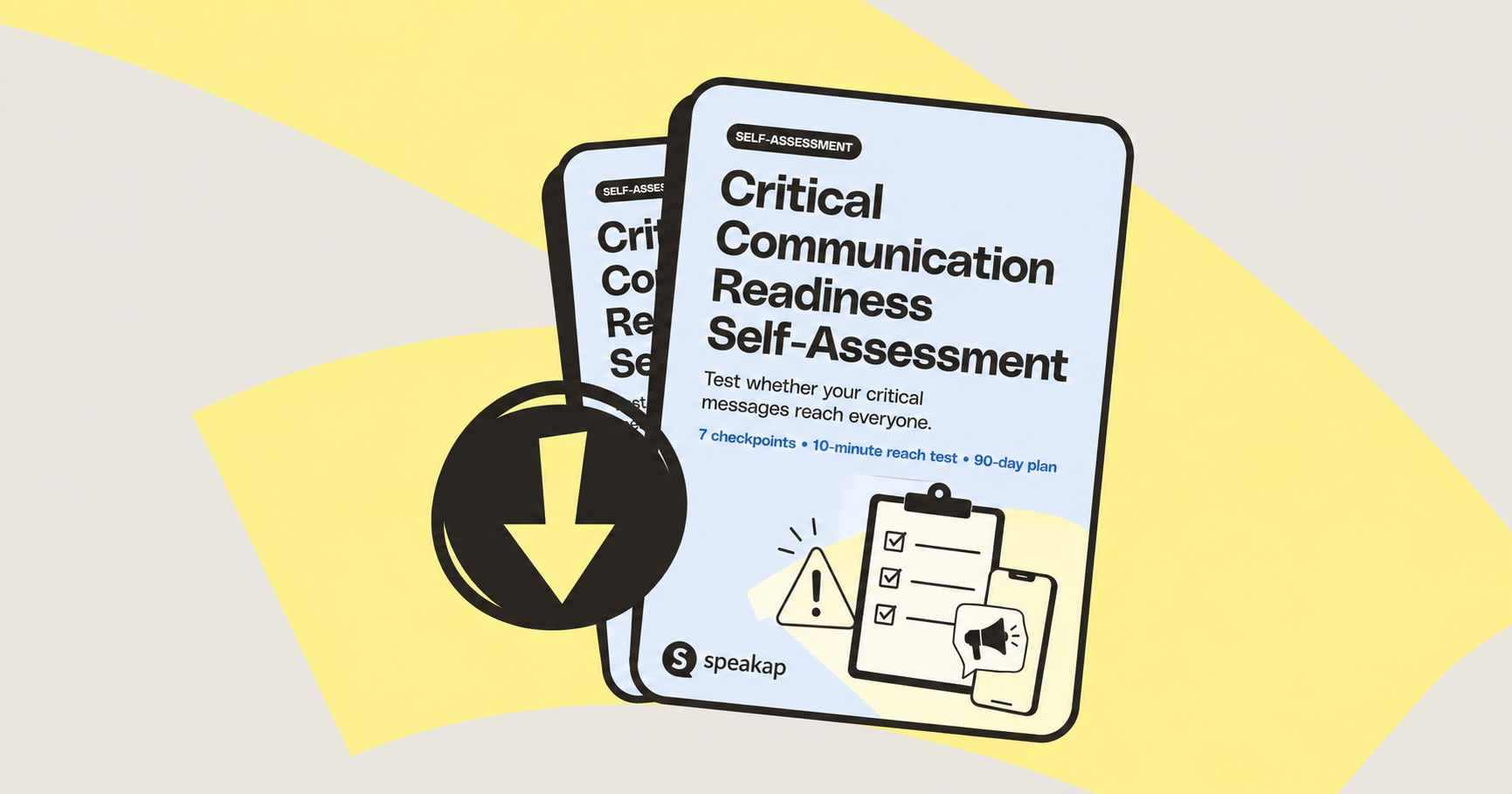
Seven checkpoints, scored green, amber or red Employee data accuracy, audience targeting, language coverage, confirmation, local responsibilities, fallback channels and testing frequency. Each one comes with the question to answer honestly and the red flag to watch for.
The 10-minute reach test A drill you can run at a single site without any new tooling. Six steps, a measured result and a named list of the people you did not reach.
A 90-day plan What to do in the first 30, 60 and 90 days, with space to note your first test site, the drill date and the local owner.
Score it, take the red checkpoints into the plan, and run one test. That is the whole exercise.
Who it is for
Internal communication, HR and operations leaders in organizations where a large part of the workforce does not sit at a desk: logistics and transport, manufacturing, retail, hospitality, healthcare, construction and facilities.
It is most useful if you run multiple sites, multiple shifts or more than one language, and if a critical message today still travels through people before it reaches the floor.
Suggested next step: Pick one site and one shift, and put the 10-minute reach test in the calendar for this quarter. The test tells you more than the scoring does.

Critical Communication Readiness Self-Assessment
Most organizations have never tested whether they can reach everyone
A site closes at 5 a.m. because of severe weather. A safety instruction changes halfway through a shift. The message goes out, and then the questions start. Did it reach the people it needed to reach? Did it reach them in a language they understand? And can you show, afterward, who confirmed it and who never saw it?
In many distributed organizations urgent communication still depends on manager cascades, bulletin boards, manually maintained contact lists and channels that do not talk to each other. That setup looks like it works, right up until speed, accuracy and proof all matter at once.
This worksheet helps you find the gaps before an incident does.
What is inside
Seven checkpoints, scored green, amber or red Employee data accuracy, audience targeting, language coverage, confirmation, local responsibilities, fallback channels and testing frequency. Each one comes with the question to answer honestly and the red flag to watch for.
The 10-minute reach test A drill you can run at a single site without any new tooling. Six steps, a measured result and a named list of the people you did not reach.
A 90-day plan What to do in the first 30, 60 and 90 days, with space to note your first test site, the drill date and the local owner.
Score it, take the red checkpoints into the plan, and run one test. That is the whole exercise.
Who it is for
Internal communication, HR and operations leaders in organizations where a large part of the workforce does not sit at a desk: logistics and transport, manufacturing, retail, hospitality, healthcare, construction and facilities.
It is most useful if you run multiple sites, multiple shifts or more than one language, and if a critical message today still travels through people before it reaches the floor.
Suggested next step: Pick one site and one shift, and put the 10-minute reach test in the calendar for this quarter. The test tells you more than the scoring does.
Critical Communication Readiness Self-Assessment
Most organizations have never tested whether they can reach everyone
A site closes at 5 a.m. because of severe weather. A safety instruction changes halfway through a shift. The message goes out, and then the questions start. Did it reach the people it needed to reach? Did it reach them in a language they understand? And can you show, afterward, who confirmed it and who never saw it?
In many distributed organizations urgent communication still depends on manager cascades, bulletin boards, manually maintained contact lists and channels that do not talk to each other. That setup looks like it works, right up until speed, accuracy and proof all matter at once.
This worksheet helps you find the gaps before an incident does.
What is inside
Seven checkpoints, scored green, amber or red Employee data accuracy, audience targeting, language coverage, confirmation, local responsibilities, fallback channels and testing frequency. Each one comes with the question to answer honestly and the red flag to watch for.
The 10-minute reach test A drill you can run at a single site without any new tooling. Six steps, a measured result and a named list of the people you did not reach.
A 90-day plan What to do in the first 30, 60 and 90 days, with space to note your first test site, the drill date and the local owner.
Score it, take the red checkpoints into the plan, and run one test. That is the whole exercise.
Who it is for
Internal communication, HR and operations leaders in organizations where a large part of the workforce does not sit at a desk: logistics and transport, manufacturing, retail, hospitality, healthcare, construction and facilities.
It is most useful if you run multiple sites, multiple shifts or more than one language, and if a critical message today still travels through people before it reaches the floor.
Suggested next step: Pick one site and one shift, and put the 10-minute reach test in the calendar for this quarter. The test tells you more than the scoring does.
Ready to start?



Stay updated with the latest insights and trends delivered straight to your inbox.


